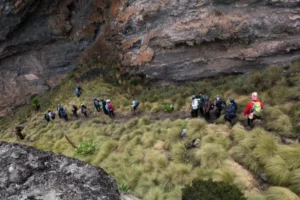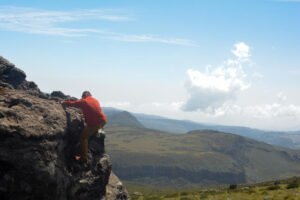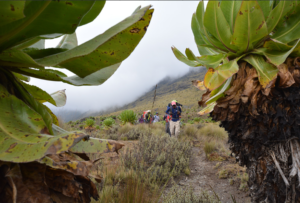

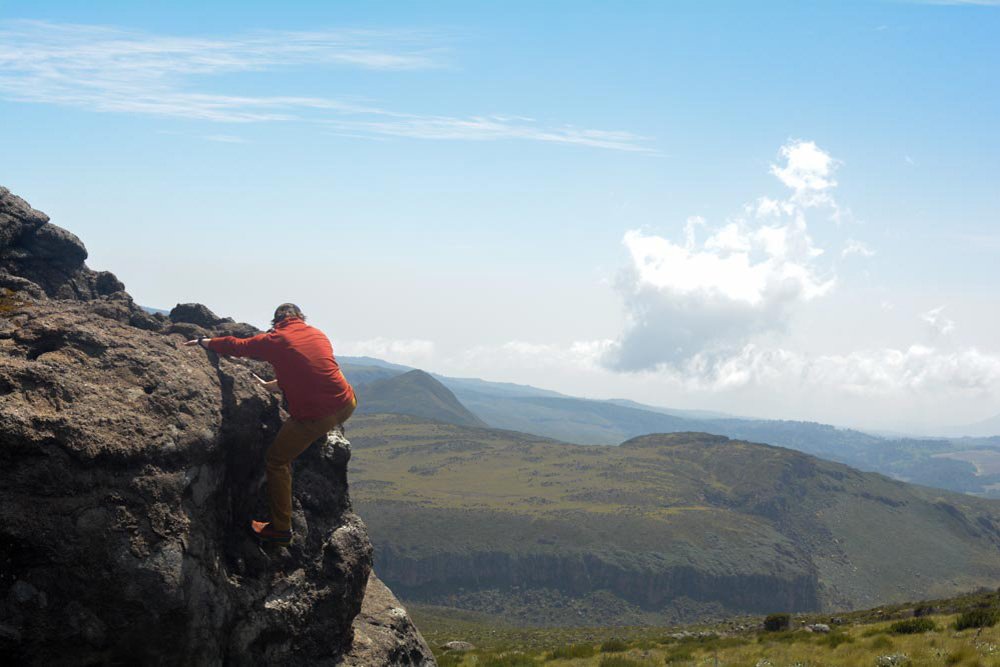
Everyone plans their Mount Kenya trip around the summit photo. Point Lenana, 4,985 m, with sunrise light hitting the glaciers since that’s the postcard moment. But the Sirimon-Chogoria route has a handful of quirks that catch people off guard, and most of them have nothing to do with fitness. Here’s what actually matters before you book.
1. Sirimon up, Chogoria down, isn’t just scenic—it’s the smarter call.
Sirimon is the drier of the two routes, which means better footing on days one and two, when your legs are still fresh and you want solid ground under you. Chogoria drops through the Gorges Valley and past Lake Michaelson on the way down, which is honestly the best scenery on the whole mountain. Doing it as a loop instead of a there-and-back means you see two completely different sides of Mount Kenya, and you’re descending on the gentler gradient after summit night, your knees will notice the difference.
2. Altitude doesn’t care how fit you are.
We’ve watched strong, marathon-trained hikers turn back at Shipton’s Camp because they pushed too hard on day one. The summit sits close to 5,000m, and altitude sickness has nothing to do with your 10k time. A 4-5 day itinerary with a proper acclimatisation day beats a rushed 3-day dash almost every time. Drink more water than feels necessary. Walk slower than feels necessary. If you get a pounding headache at Shipton’s, tell your guide to not push through it and hope it passes.
3. The weather changes faster than you’d think.
Sunny at the trailhead means nothing about Old Moses or Shipton’s Camp a few hours later. You’ll pass through rainforest, bamboo, moorland, and alpine desert in a single day, sometimes in a single hour. Pack layers you can add and strip fast: a warm base layer, a windproof shell, and something serious for the summit push, which usually starts around 2am to catch sunrise from Point Lenana. Gloves and a proper hat aren’t optional here. They’re the difference between actually enjoying the summit and just gritting your teeth through it.
4. A good guide matters more than a cheap one.
Solo trekking on Mount Kenya isn’t really a thing anymore, and it shouldn’t be. The terrain shifts fast, and altitude emergencies need someone who knows the evacuation routes without hesitating.
What separates a decent guide from a great one isn’t the certificate on the wall; it’s how closely they watch you for early signs of altitude sickness and whether they’re willing to slow the group down or turn someone back when it’s needed.
At Savage Wilderness, our guides run this mountain constantly, which means they’ve seen every way a trek can go sideways and know how to head it off before it does. Ask any operator about their emergency protocol before you book, not after you’re already at Old Moses wondering.
5. Budget for the porters, not just the permits
Camps like Old Moses, Shipton’s, and Mintos are basic with bunk huts or tents, no showers, and cold nights even inside a good sleeping bag. That’s the trade-off for being on one of East Africa’s genuinely wild mountains, with a fraction of the crowds you’d find on Kilimanjaro.
Porters carry your gear between camps day after day and tipping them properly at the end isn’t a nice gesture; it’s how the whole system stays functional. Factor that into your budget alongside park fees and guide costs, not as an afterthought.
Mount Kenya via Sirimon and Chogoria stays one of the best multi-day treks in the country precisely because it hasn’t been polished smooth. Go in with realistic expectations about the cold, the altitude, and the pace, and it hands you views Kilimanjaro simply can’t compete with. If you’d rather skip the guesswork on logistics, guides, and camp bookings, Savage Wilderness runs Mount Kenya expeditions on this exact route year-round.