
Mount Kenya doesn’t get the same attention as Kilimanjaro, and honestly, that works in its favour. Fewer crowds, wilder terrain, and two of its best routes — Sirimon and Chogoria — happen to pair beautifully if you’ve got the time to link them. Here’s why they’re worth putting on your list.
1. You skip the crowds without skipping the mountain.
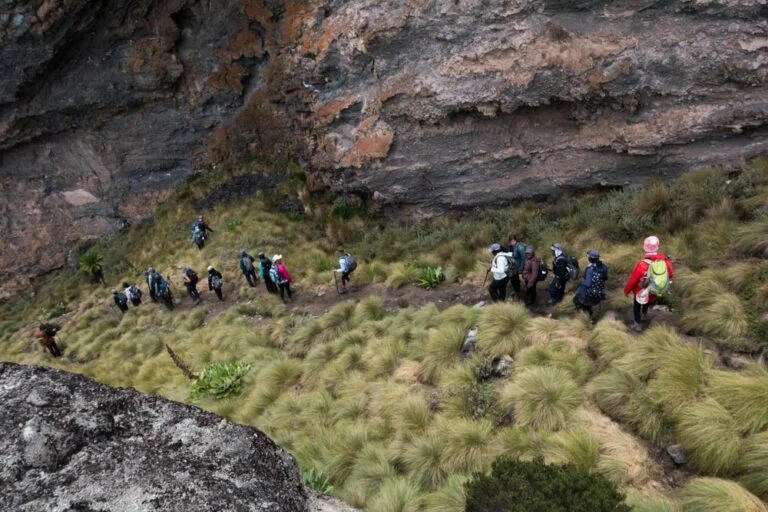
Kilimanjaro can feel like a conveyor belt during peak season, with camps that fill up fast and trails that never really empty out. Mount Kenya, even on its most popular paths, rarely does. Sirimon and Chogoria see a fraction of the foot traffic, so you get long stretches where it’s just you, your guide, and the mountain. That’s not a minor perk — it changes the whole feel of the trek, and it means the wildlife you pass isn’t already spooked by fifty people ahead of you.
2. The scenery actually changes as you climb.
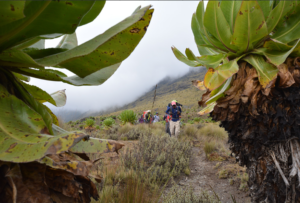
Start on Sirimon, and you’re walking through montane forest first, then open moorland dotted with giant lobelias that look like they wandered in from another planet. By the time Point Lenana comes into view, you’re in an alpine zone that feels almost lunar—bare rock, thin air, and a silence you don’t get lower down. Chogoria, on the other side, throws in the Gorges Valley and the Vivienne Falls, genuinely one of the most photographed stretches on the whole mountain, and for good reason.
3. Sirimon up, Chogoria down (or vice versa) means no repeat views.
This is the detail a lot of trekkers miss. Doing an out-and-back route means retracing your steps, which is fine but a bit repetitive by day three. Combining Sirimon and Chogoria as a traverse means every single day shows you something new. You ascend through one ecosystem and descend through a completely different one, and the two sides of the mountain barely resemble each other. Few multi-day treks anywhere offer that kind of variety in under a week.
4. Better acclimatisation, fewer headaches — literally
Altitude sickness ruins more Mount Kenya attempts than bad weather does. It doesn’t care how fit you are; it cares how fast you climbed. The Sirimon-Chogoria traverse tends to give your body more days and more gradual elevation gain to adjust, which matters a lot above 4,000 meters. It’s not a guarantee — nothing is at altitude — but the extra day or two built into this combination genuinely helps, and most guides will tell you it’s the difference between summit day feeling hard and feeling impossible.
5. Point Lenana is achievable without technical climbing gear.
Batian and Nelion, Mount Kenya’s true summits, require rock climbing experience most trekkers don’t have. Point Lenana, at 4,985 metres, doesn’t. It’s a trekking peak, meaning fit hikers with the right acclimatisation schedule can reach it on foot; no ropes or harnesses are required. Sirimon is widely considered the most direct and manageable way up to Lenana, which makes it a smart starting route if summiting is actually the goal rather than just a nice-to-have.
6. Wildlife and vegetation you won’t see on Kilimanjaro
Mount Kenya’s lower slopes hold elephants, buffalo, and colobus monkeys, and its afro-alpine zone is home to plant life found almost nowhere else on Earth. Those giant groundsel and lobelia aren’t decorative—they’re genuinely rare, shaped by altitude and cold in ways that make them look almost prehistoric. Chogoria in particular winds through some of the richest forest sections on the mountain before opening into high moorland, and it’s often the route where hikers spot the most animals.
7. It’s a shorter commitment than most people assume.
A Sirimon-Chogoria traverse typically runs four to five days, which is manageable for most fitness levels and schedules. You don’t need two weeks off work or months of dedicated training. What you do need is a good guide, proper acclimatisation planning, and gear suited to genuinely cold nights at altitude—Mount Kenya’s summit zone gets far colder than people expect, often dropping well below freezing before dawn.
Trekking Mount Kenya with Savage Wilderness
Savage Wilderness has been running trips on Mount Kenya for years, and the Sirimon-Chogoria combination is one we recommend often. It’s simply one of the best ways to experience the mountain without needing technical climbing skills, and it gives you a fuller picture of what Mount Kenya actually looks like. Our guides know the terrain, the altitude patterns, and the small details that make the difference between a trek that goes smoothly and one that doesn’t.
If Mount Kenya’s been on your list, this route combination is a solid place to start. Get in touch with Savage Wilderness, and we’ll help you plan a trek that actually matches your fitness level and timeline—not a generic itinerary pulled off a template.