
Somewhere around the third time you’ve opened a map of Mount Kenya trying to work out which side to start from, you realise nobody actually tells you which route to pick. They tell you both are good. Both are scenic. Both lead to Point Lenana. True, and also not that helpful when you’re the one booking flights and taking time off work.
So here’s the version with an actual opinion in it.
Sirimon route to Mount Kenya, the sensible way up
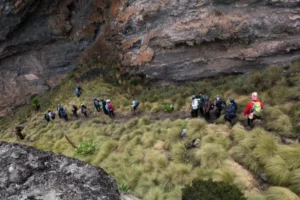
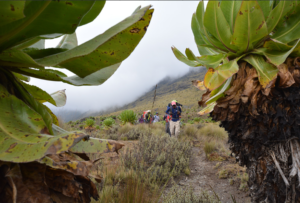
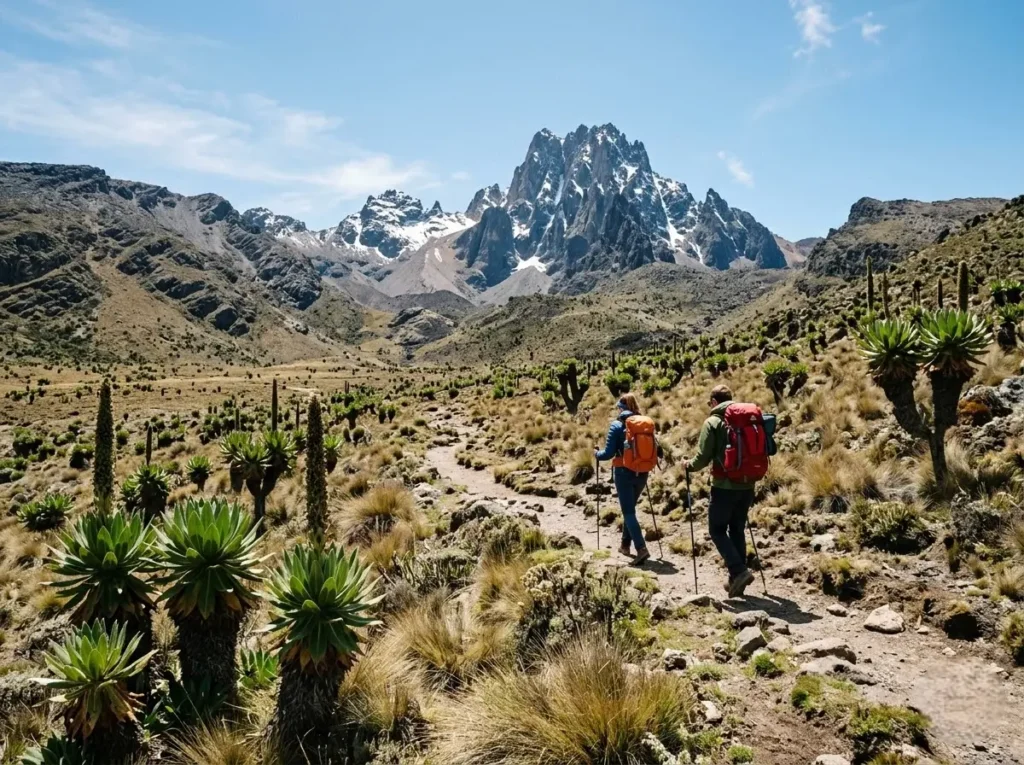
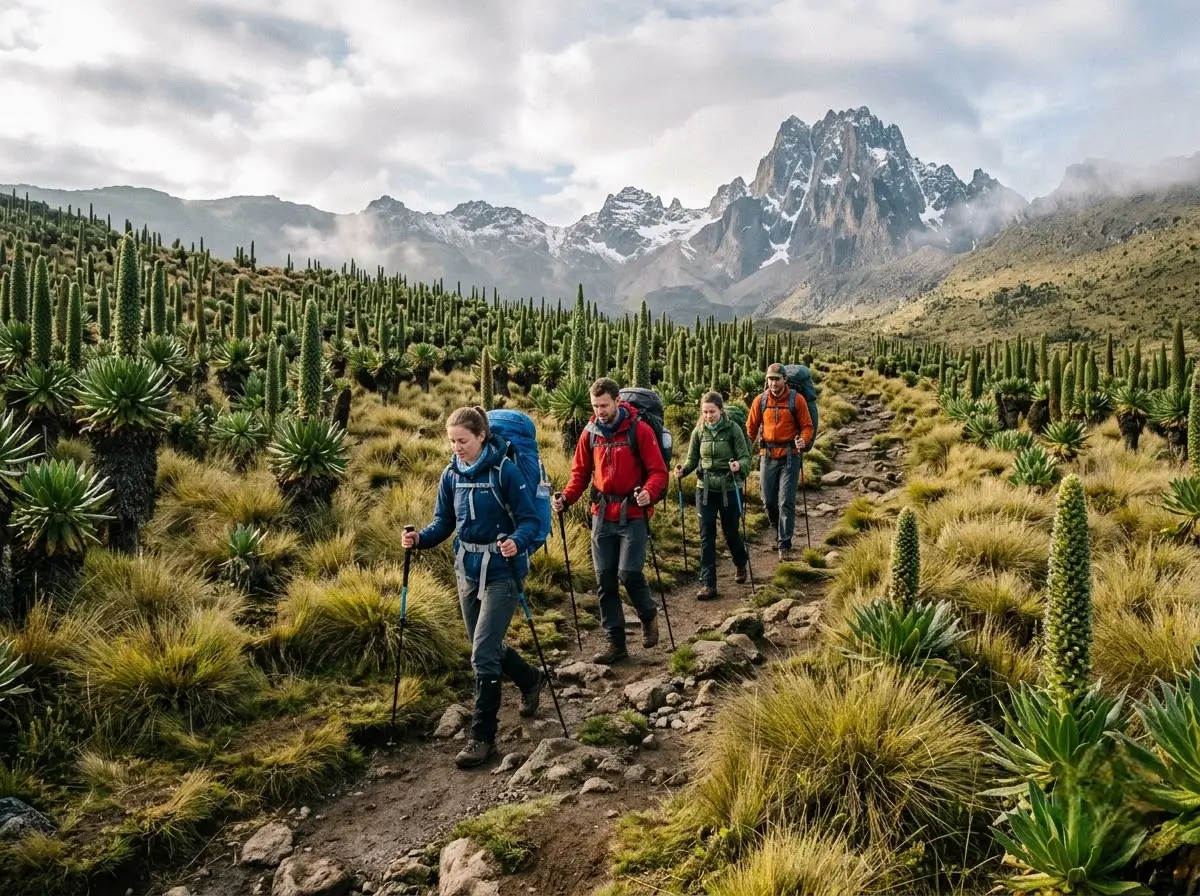
Sirimon approaches from the northwest, and it’s the route most guides will put you on first if summiting is the actual goal rather than a nice idea. You start in montane forest, climb into open moorland full of giant lobelias that genuinely look like something out of a Tim Burton film, and gain height gradually enough that your body has a fair chance of keeping up. That gradual gain matters more than people think. Altitude sickness doesn’t care about your gym membership; it cares about how fast you climbed, and Sirimon gives you the kindest curve of any route on the mountain.
It’s also, frankly, a bit less dramatic than Chogoria. Fewer jaw-dropping moments, more steady, workable terrain. That’s not a criticism. When you’re three days in and your legs are starting to ask questions, steady and workable is exactly what you want.
Chogoria route, Mount Kenya, the one you’ll actually remember
Chogoria is the showier side. You get the Gorges Valley, Lake Michaelson sitting improbably blue against the rock, and Vivienne Falls, which is the single most photographed stretch on the whole mountain and earns it completely. Climbing up Chogoria is possible, and some operators run it that way, but most guides send trekkers down it instead after summiting via Sirimon. There’s a reason for that beyond aesthetics: descending Chogoria after Point Lenana means you’re moving through that scenery with tired legs and no pressure to keep an eye on your altitude gain, which is honestly when you can enjoy it properly.
Do it the other way round, Chogoria up, Sirimon down, and you get a harder acclimatisation profile, since the ascent is steeper in places. Fitter trekkers manage it fine. If you’re not certain how your body handles altitude, don’t gamble on finding out on the tougher route.
The Point Lenana trek, what summit day is actually like
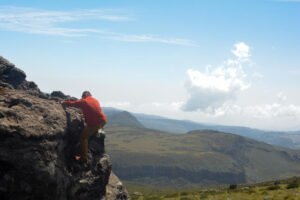
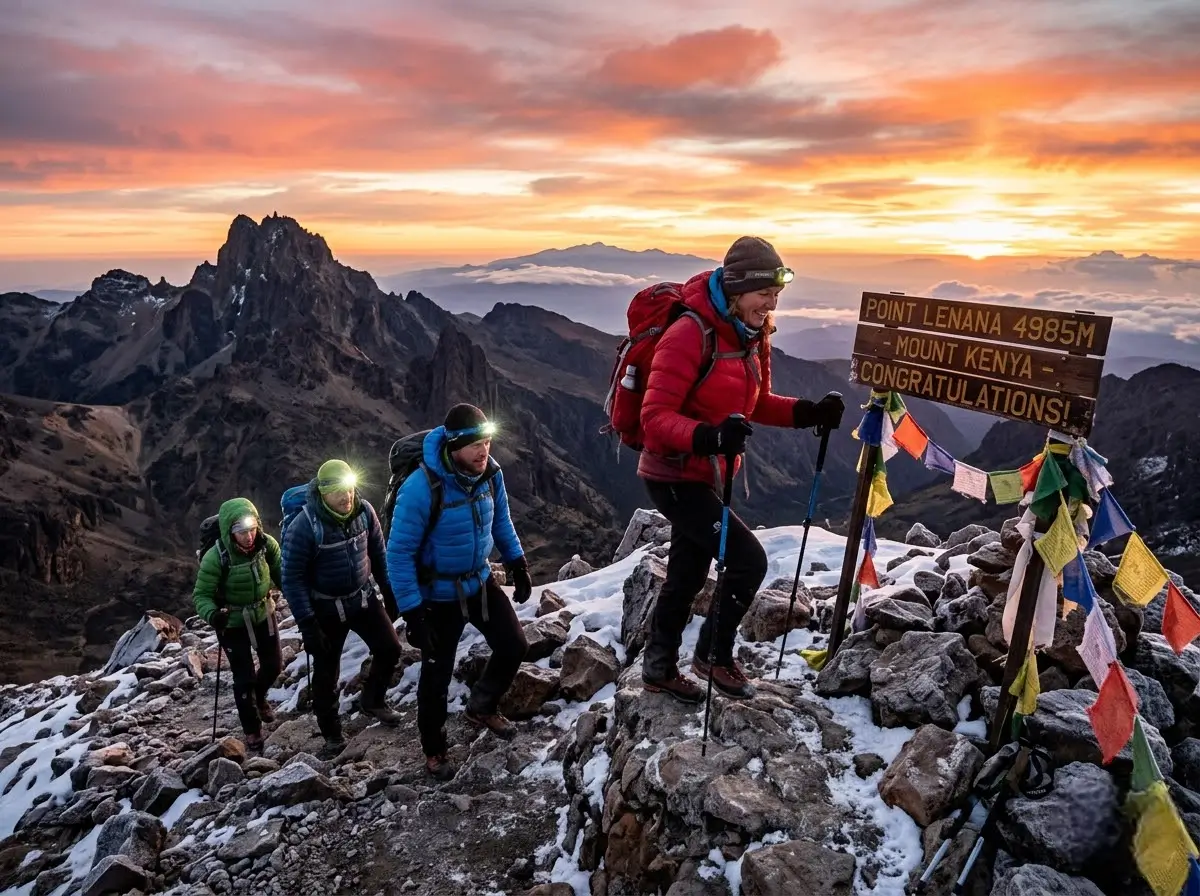
Point Lenana sits at 4,985 metres and doesn’t require ropes, harnesses, or any technical climbing, that’s reserved for Batian and Nelion, which most trekkers have no business attempting without serious mountaineering experience. What Point Lenana does require is a very early start. Most groups leave camp around 3am, walking by headtorch through cold that gets properly bitter before dawn, arriving at the summit in time to watch the sun come up over the Chogoria side. It’s cold enough that people who’ve never needed a proper down jacket in their life suddenly understand why one exists.
The Kenya Wildlife Service, which manages the national park, requires a licensed guide for any of the main climbing routes, so this isn’t something you can improvise with a paper map and good intentions.
Best time to hike Mount Kenya
Kenya has two dry windows: January to March and June to October. Both work, though January to March tends to bring clearer skies and slightly warmer nights, which matters more than you’d think when you’re trying to sleep at 4,200 metres. The wet seasons, roughly April to May and November, turn the lower forest sections into a genuine slog and can make river crossings on Chogoria trickier than they need to be. If your dates are flexible at all, build the trip around one of the dry windows rather than working backwards from a random week off.
Choosing a Mount Kenya trekking guide
This is where a lot of people cut corners, and it’s the wrong place to do it. A guide who knows the mountain will read your pace on day one and adjust the itinerary before altitude becomes a problem, not after. At Savage Wilderness, we’ve run the Sirimon-Chogoria combination for years, and the trips that go smoothly are almost always the ones where the guide built in that extra acclimatisation day rather than sticking rigidly to a five-day template because it looked good on a brochure.
Not sure which route suits you?
If you’re weighing up which side to start from, that’s a conversation worth having before you book, not after you’re standing at Sirimon Gate wondering if you’ve made the right call. Get in touch with Savage Wilderness and we’ll help you build an itinerary around your fitness and your dates, not a generic one pulled off a template.
Plan Your Mount Kenya Trip