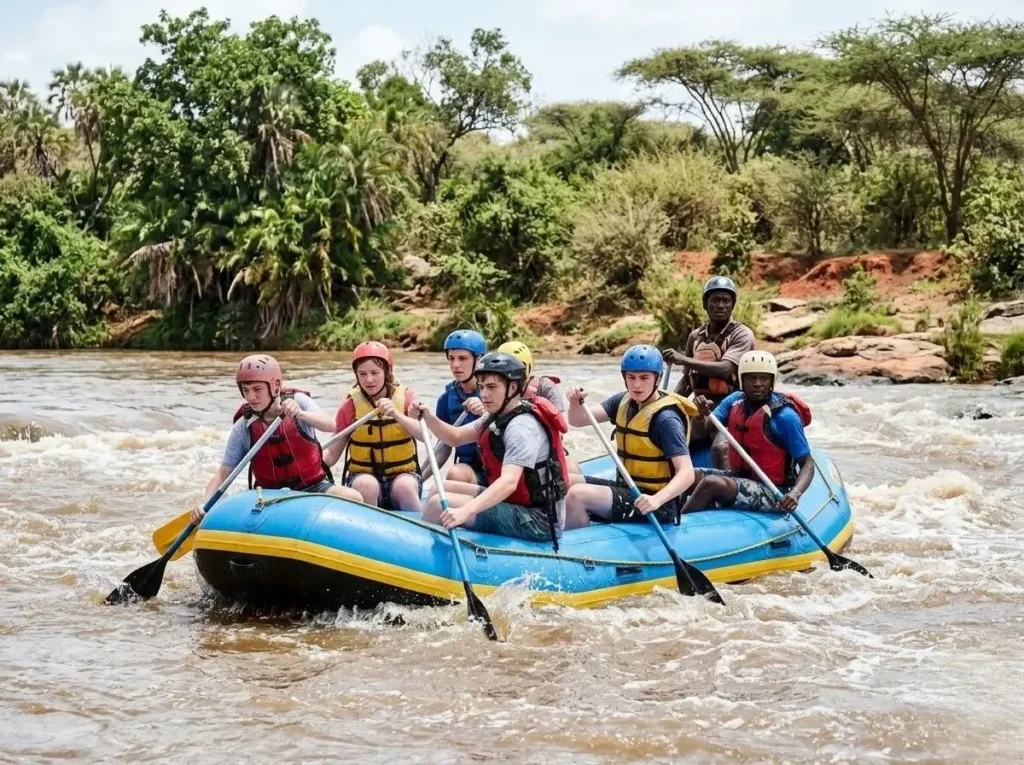
Put a young person on a raft, halfway up a climbing wall or on a mountain bike trail, and something interesting happens.
The classroom changes.
Suddenly the lesson is no longer theoretical. Decisions have consequences. Communication matters. Confidence is tested. Someone has to lead, someone has to listen, and, occasionally, something doesn’t go according to plan.
And that is exactly where some of the most valuable learning begins.
At Savage Wilderness, we believe adventure should be more than simply an exciting day outdoors. Done properly, it is education.
The outdoors teaches things a classroom can’t always teach.
Outdoor education gives young people the opportunity to experience challenge in a very real but carefully managed environment.
A student who is nervous about entering moving water, tackling a difficult climb or riding an unfamiliar trail has to manage uncertainty, listen to instructions, make decisions and trust the people around them.
Completing the challenge creates something equally important. Evidence of their own that they can do difficult things.
Research into outdoor adventure learning points towards benefits including self-confidence, self-efficacy, motivation, teamwork and collaborative problem-solving. The evidence for direct academic improvement is less certain, but the wider developmental value of outdoor learning is increasingly recognised.
That distinction matters.
The objective isn’t simply to make children better at rafting, climbing or mountain biking. The activity is the tool. The development is the outcome.
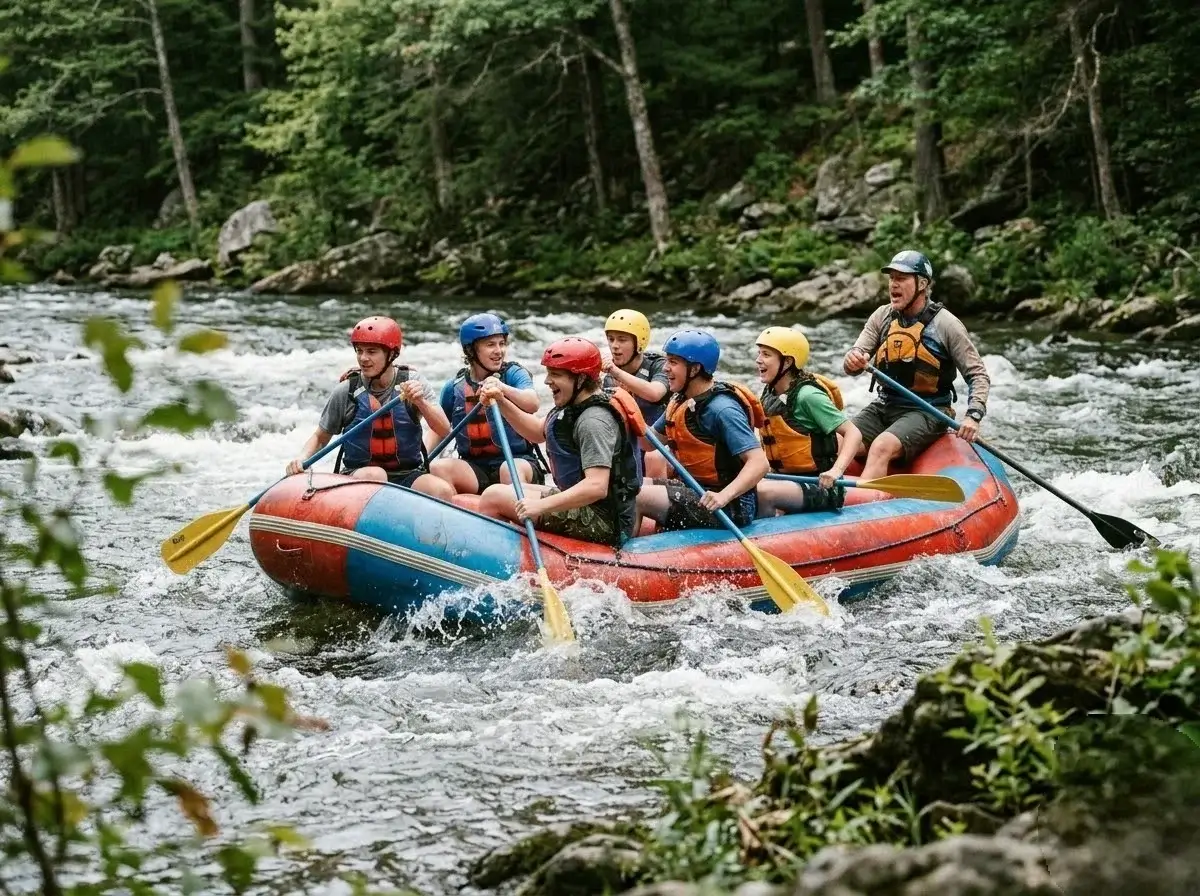
From the British Army to the school environment
Savage Wilderness has spent years delivering Adventurous Training programmes for British Army personnel in Kenya.
For the Army, adventure training isn’t simply recreation.
The British Army uses challenging outdoor environments deliberately to develop qualities including leadership, resilience, teamwork, confidence, determination and the ability to perform outside familiar surroundings.
One of the most useful principles is the idea of the comfort, stretch and panic zones.
Inside the comfort zone, very little changes.
Push someone too far, and they enter the panic zone, where learning can quickly disappear.
Between the two is the stretch zone. Enough challenge to require effort, courage, teamwork and problem-solving, while still operating within a properly controlled environment.
That is where instructors want participants to spend their time.
And the same principle works remarkably well with young people.
Challenges should be progressive, not reckless.
Good outdoor education isn’t about frightening somebody into completing an activity.
It is about understanding the individual in front of you and creating the right level of challenge.
One student might comfortably jump into a kayak, while another needs ten minutes simply to feel confident sitting in it.
Both can experience meaningful development.
The role of the instructor is to recognise the difference.
A well-designed programme therefore progresses through building blocks. Developing basic skills, creating confidence, increasing responsibility and gradually introducing greater challenge.
Participants are encouraged to try, make decisions, communicate, sometimes fail, adapt and try again.
Afterwards, the experience can be reflected upon.
What worked?
What didn’t?
Who stepped forward?
How did the team communicate?
What changed when things became difficult?
Those conversations are often where an adventure becomes education.
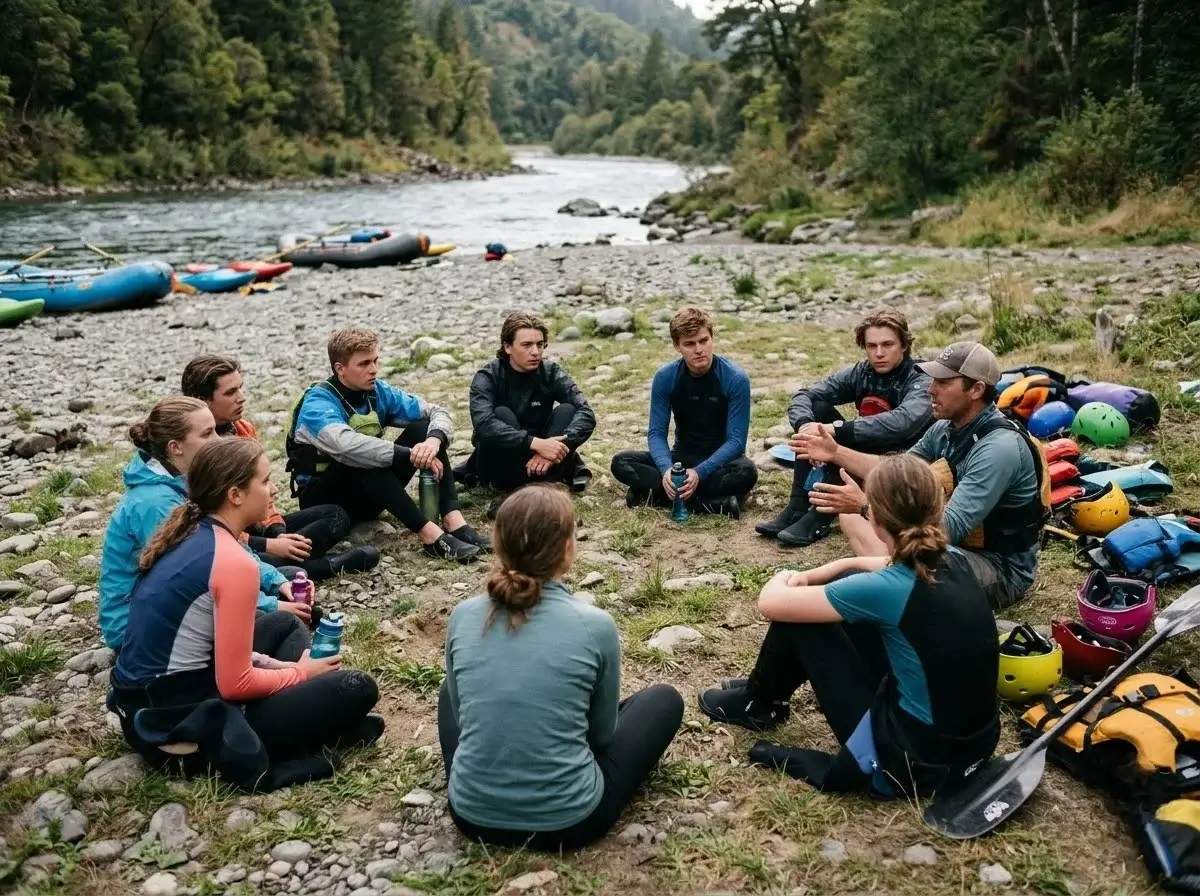
Why we stopped thinking of our team simply as “guides”
Working closely with British Army Adventurous Training has changed the way Savage Wilderness approaches outdoor programmes.
Traditionally, someone taking a group rafting, climbing or mountain biking might simply be called a guide.
But guiding somebody through an activity and instructing somebody through an experience designed to develop them are two very different things.
Over recent years we have invested heavily in developing our team beyond technical guiding.
Our instructors have undergone extensive technical training, safety training, rescue training, first aid development and activity-specific qualifications. Just as importantly, they have developed their ability to teach, coach, observe groups, manage progressive challenge and understand the purpose behind an Adventurous Training session.
Today, we increasingly see our team not simply as guides but as outdoor instructors.
Their job isn’t only to get a group safely down a river or through an activity.
Their job is to create an environment in which people can learn.
| Guide | Instructor | |
|---|---|---|
| Main focus | Getting the group safely through the activity | Creating an environment where people can learn |
| Skills | Technical know-how and safety | Technical, safety, rescue and first aid training, plus teaching and coaching |
| During the session | Leads the group down the river or through the activity | Watches how the group responds and builds challenge in stages |
| What the group leaves with | A brilliant day outdoors | More confidence, resilience and teamwork, and a chance to reflect on how they got there |
The same river. A completely different experience.
Two groups can raft exactly the same section of river and have completely different programmes.
One might simply have a brilliant day of white-water rafting.
The other might be asked to communicate as a team, rotate leadership, solve problems, take responsibility and reflect on how they responded when the pressure increased.
The activity hasn’t changed.
The intention behind it has.
That is the direction outdoor education is moving at Savage Wilderness.
Whether we are working with British Army personnel, an international school or a group of young people experiencing adventure for the first time, we want participants to leave with more than photographs.
We want them to leave a little more confident.
A little more resilient.
A little better at working with others.
And, most importantly, knowing that when something difficult appears in front of them, they are capable of taking the next step.
Because sometimes the best classroom doesn’t have four walls.
Frequently Asked Questions
How is outdoor education different from a regular adventure trip?
The difference isn’t in the activity; it’s in the intention. Two groups can raft the exact same stretch of river, one just has a great day out, the other rotates leadership, solves problems as a team, and reflects afterwards on how they handled pressure. That second version is outdoor education.
Is this only for the military, or does it work for schools too?
Savage Wilderness built this approach through years of delivering adventurous training for the British Army, but the same principles apply just as well to schools and young people. The comfort-stretch-panic zone model isn’t age-specific, what changes is how much challenge each individual needs.
What if a child is scared of the activity, do you push them through it?
No. The goal is keeping someone in the “stretch zone”, enough challenge to require effort, not so much that it tips into panic. One student might jump straight into a kayak; another might need ten minutes just to feel okay sitting in it. Both experiences count as development. Recognising that difference is the instructor’s job.
What’s the actual difference between a guide and an instructor?
A guide gets you through the activity safely. An instructor turns that same activity into something you learn from, teaching, coaching, watching how the group responds, building challenge in stages, and understanding why the session exists in the first place. That’s why Savage Wilderness stopped calling its team guides.
Does this actually improve academic performance?
The evidence for a direct academic boost is weaker than you’d expect. What’s better supported is the effect on self-confidence, self-efficacy, motivation, teamwork and problem-solving, and that’s really the point of the programme, not grades.
Planning an outdoor education day for your students?
Tell us about your group, their ages and what you want them to come away with. We’ll help you build a programme around the people in it, not a one-size-fits-all day out.
Plan Your School Programme